

Ghost commerce is a trending marketing strategy in 2025. Whether you are already running an e-commerce store or thinking of building a new one, ghost commerce is a reliable option. It is a powerful approach that allows merchants and other business professionals to expand their business without worrying about manufacturing, store, and inventory costs.
In this blog, we’ll learn more about what ghost commerce is and how it functions. Alongside the advantages and drawbacks of using it, and the best practices to use it successfully for your upcoming business projects in 2025.
What is Ghost Commerce?
Just like e-commerce, Ghost commerce relates to running an online store; however, the owners are not manufacturing or storing products themselves. They consult third parties to manufacture, store, and deliver products to their customers. Through this approach, owners can concentrate on marketing and branding, which results in high sales.
As e-commerce expands, ghost commerce is the preferred choice of many modern entrepreneurs because it is secure, beginner-friendly, and easy to manage. This model is often confused with dropshipping or affiliated marketing, but they are different.
Dropshipping is how orders are completed; marketing is not a compulsory requirement here. Affiliated marketing is promoting third-party products to get a commission, without owning the brand as in ghost commerce.
Key Features of Ghost Commerce Business
Here are some key properties of Ghost commerce business model:
| Features | Details |
| No inventory | No need of physical inventory Minimizes inventory related costs |
| Affiliate relationships | Help in boosting profit margins |
| Stong online presence | To attract customers |
| Trust and credibility | Sustained success |
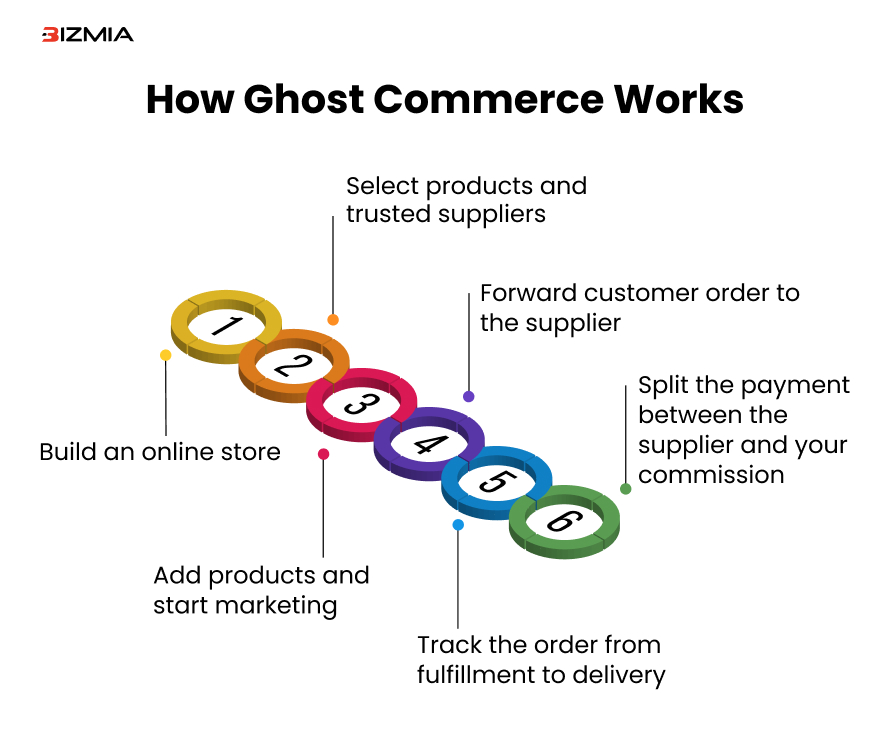
How Ghost Commerce Works
Here stores work by unifying your online store with third-party providers or manufacturers. Here is a brief overview:
Step-1: Build an online store on a platform like Shopify, WooCommerce, BigCommerce, or Squarespace.
Step 2: Select products that you are going to obtain from manufacturers, wholesalers, suppliers, or dropshipping suppliers.
Step 3: Add the list of products to your online store and start promoting them through different channels such as social media platforms, email marketing, or hiring promotors.
Step-4: When a customer puts an order, share details with suppliers or automate this process of sharing the order.
Step-5: After fulfilling the order requirement, the supplier sends it to the customer by mentioning your store name or their name as per the terms and conditions decided before.
Step-6: You will get the payment online or COD and will pay the supplier wholesale cost of the product and take your commission.
There are many tools with the help of which automation of each step is done, including order processing, tracking, fulfilling, shipping, and payment. You can consult Bizmia to provide you with expert support in setting up your ghost commerce business.
Why Use Stock Photos in Ghost Commerce
Adding your stock pictures in Ghost Commerce is a smart strategy to build trust. It also gives a professional feel without requiring any high-end photoshoots or even physical products. Product images make your online store look polished, capture attention from potential buyers, and make your products more authentic and believable.
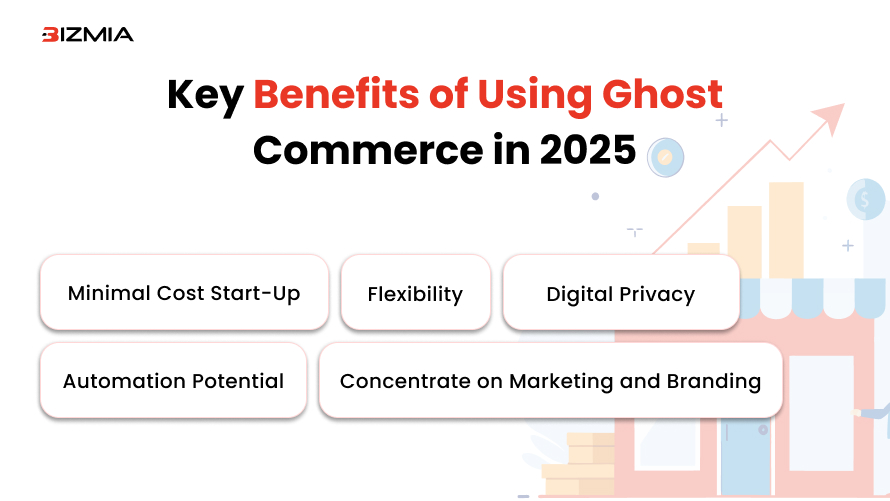
Key Benefits of Using Ghost Commerce in 2025
There are several benefits to using ghost commerce for your store, some of them are the following:
1. Minimal Cost Start-Up
Opening an e-commerce store does not require a lot of investment. The reason is the owner is not taking care of manufacturing, inventory, or storage. So, they don’t need money to buy a warehouse or a lot of inventory to start a business. This significantly will reduce financial risk and make opening a business more convenient.
2. Flexibility
As you are not playing the role of manufacturer, you can easily switch between products, niches, and markets. It also offers to change the number of products depending on the customer’s buying behavior. Moreover, there are no restrictions on handling your business from anywhere at any time.
3. Digital Privacy
Privacy is the concern of both owners and shoppers; hence ghost commerce ensures privacy by shielding from intrusive data breaches, online tracking, and any sort of censorship. The owner does not always want to go viral in the market. While on the other hand, customers need security, they are concerned about all the private information they provide to online stores.
4. Automation Potential
With the rise of AI trends for e-commerce, you can arrange a ghost commerce store that needs little to no manual work. By using AI tools, you can automate multiple processes such as inventory management, order handling, customer care, and promotions.
5. Concentrate on Marketing and Branding
When you do not have to focus on manufacturing, storing, shipping, or inventory management, you can easily focus on marketing and branding your online store. This is done by examining customers’ buying behavior and trying new marketing strategies which increase sales.
To leverage all these plus points of Ghost commerce, you can hire skilled e-commerce platform developers for smooth operations.
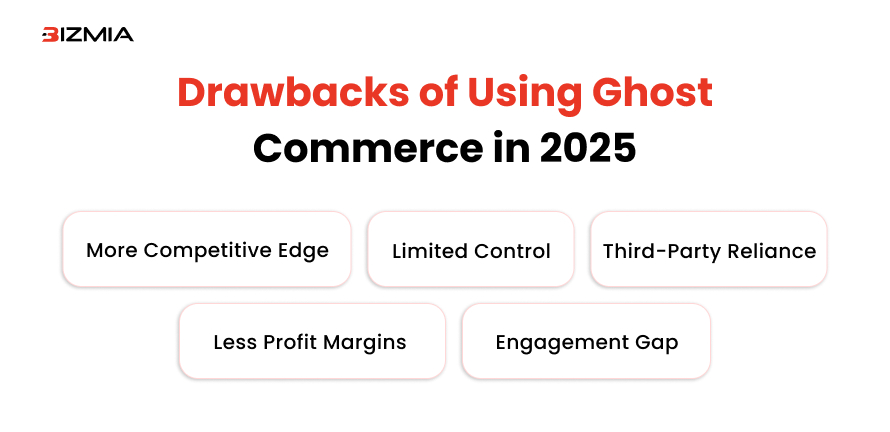
Drawbacks of Using Ghost Commerce in 2025
Alongside many incredible benefits ghost commerce has also some flaws:
1. Crowded Ghost Commerce Market
Ghost commerce became word of mouth back in 2023, so it is not very new in the market. It already has almost every market captured, which is why it is not easy to give something different than others. It just excels with smart branding and creative marketing to gain customer’s attention.
2. Limited Control
As you are not manufacturing products on your own, you have less control over the product quality, standby inventory, and shipping. This will surely affect the brand or store image, and customers will get detached from you.
3. Third-Party Reliance
Your operations completely depend on third parties such as manufacturers, wholesalers, and suppliers. They can negatively impact delivery times, quality of products, and availability of stock.
4. Less Profit Margins
The base cost is decided by the supplier and you as the owner add up the selling cost of the product as your commission. But the problem is you can’t make it above the market price. And often there is a middleman who also can influence the price margin.
5. Engagement Gap
When you are not producing products, you cannot give personalized experience to your customers. Which results in a lack of trust and attachment to your products. So, there is always an engagement gap between the Ghost Commerce store and its customers.
Best Practices for Ghost Commerce Growth
Here are some practices to run a successful store:
1. Select Niche Smartly
Select the niche that is in demand but has less competition. Perform SWOT analysis to understand opportunities, threats, strengths, weaknesses, and what the demands of customers are. This will help you to get loyal and long-term customers.
2. Build a Strong Online Store
Ensure to provide user-friendly and attractive features at your online store. That is possible with the help of selecting the right platform that offers more customization options, a variety of themes, and secure payment methods. You can get help from trusted e-commerce partners like Bizmia to help you build a store that truly reflects your brand.
3. Enhance Shopping Experience
In 2025, it is essential to identify the importance of e-commerce in Progressive Web Apps (PWAs) development so you can increase the performance of your store. PWAs are fast, reliable, and engaging. It provides a seamless shopping experience on mobile phones and desktops.
4. Use AI tools
To use time and resources effectively, AI tools are crucial. It ensures the reduction of manual tasks such as stock management, sending promotional campaigns, customer service agents, and personalized messages, etc.
5. Make Strong Partnerships
To provide quality products, make sure to have partnerships with trusted suppliers. Plus, always follow terms and conditions as decided per contract to maintain a good relationship. And keep a backup plan to avoid any kind of disturbance.
Conclusion
Ghost commerce has become a new trend in e-commerce this year. It offers businesses flexibility, cost-effectiveness, digital privacy, and broad automation. However, it comes with a few disadvantages like more competition, limited control, and less profit margin. But still, by following best practices, you can enhance the growth of your ghost commerce store. Therefore, for growing e-commerce businesses and startups, ghost commerce is a suitable option that demands minimal investment.
Frequently Asked Questions
What is ghost commerce in simple terms?
Operating an online store without manufacturing or keeping inventory involves consulting suppliers to deliver products directly to your customers.
How does ghost commerce work?
Products from third-party suppliers are added to your online store, and then customers place an order, and the supplier fulfills that and delivers to their doorstep.
What are the main benefits of ghost commerce?
There are several benefits including minimal investment cost, more flexibility, digital privacy, automation opportunities, and effective marketing or branding.
Is ghost commerce legal?
Yes, according to e-commerce rules, taxes, and supplier’s consent it is considered legal.
Is ghost commerce the same as dropshipping?
No, we can say dropshipping is one aspect of ghost commerce, it is considered as a fulfillment method, and it does not need marketing as in ghost commerce.
Can beginners start a ghost commerce business?
Yes, this is totally a beginner-friendly model because it offers more tools and demands less investment costs.
Which platforms are best for ghost commerce?
Platforms like Shopify, WooCommerce, BigCommerce, and digital marketplaces like Amazon and eBay are perfect for ghost commerce.