

Why DTC is becoming Popular
The e-commerce domain is getting influenced by DTC brands in 2025. Let’s see how:
- Agile D2C brands are disrupting traditional retail ones by offering transparent pricing, niche products, and personalized customer experiences.
- The ability to own client data, respond to feedback and trends in real-time, and engage directly is making DTC more appealing.
- Even small brands can compete with giants due to fewer barriers to market entry and reduced overheads.
- These brands are building communities and generating repeat sales by establishing loyalty via social media campaigns, influencer marketing, and digital ads.
All of this is possible even without paying for shelf support and sharing profits with retailers.
Top 8 Tips to Scale as a DTC Brand
Let’s learn the 8 proven tips that you can follow to run your DTC brand successfully:
1. Master a Compelling Brand Story
The identity of any brand is based on an interesting story. Soppers like to connect with brands that are mission-driven, transparent, and authentic. Talk about why your brand is important, what value it stands for, and what things it caters to.
A compelling brand narrative sets you apart from other competitors in the e-commerce market. It also helps in building a strong emotional connection with the audience.
2. Invest in an Interactive Website
Your brand’s website is your digital storefront. It must be easy to navigate, fast, mobile-optimized, and built to turn visitors into buyers. Also, it must include high-quality visuals, detailed product descriptions, clear CTAs, and a smooth checkout process. Moreover, adding social proof and client reviews boosts sales and builds trust.
3. Customization based on Data
To offer personalized experiences, collect and analyze customer data. From product recommendations to targeted emails and retargeting ads, customization helps in improving conversion rates and user engagement. Top DTC brands excel by making every customer feel valued and understood.
4. Build a Strong & Active Community
Community is your brand’s tribe, not just a customer base. You can further strengthen relationships by using social media platforms (Facebook, Instagram, LinkedIn, etc.), loyalty programs, and newsletters. To ensure deeper engagement, encourage user-generated content, reply to comments, and host contests.
5. Exceptional Customer Support
Giving exceptional customer support is a true D2C e-commerce differentiator. You can turn a one-time shopper into a loyal customer through helpful, fast, and empathetic service. It’s a good option to provide multiple channels for support, such as email, chat, and phone. Additionally, a solid helpdesk and informative FAQs page improve trust.
6. Implementing a Subscription Model
A powerful way to grow any direct-to-consumer brand is recurring revenue based on subscription. By implementing a subscription model, products such as skincare, supplements, or coffee work exceptionally well.
It’s a great idea to give easy cancellation, rewards, and flexible options (while placing an order) for long-term subscribers.
7. Choose Content Marketing and Influencers
You can work with influencers to amplify your brand message with authenticity. You can also pair this strategy with content marketing such as tutorials, blogs, and videos to educate customers and drive organic traffic on the website. This combo helps in boosting both authority and visibility.
8. Tracking and Constant Optimization
To have a better understanding of user behavior, use advanced tools like Google Analytics, A/B testing platforms, and Hotjar. From product pages to ad creatives, test and everything. Moreover, continuous optimization results in a seamless user experience and better ROI.

Top DTC Brands Winning Big
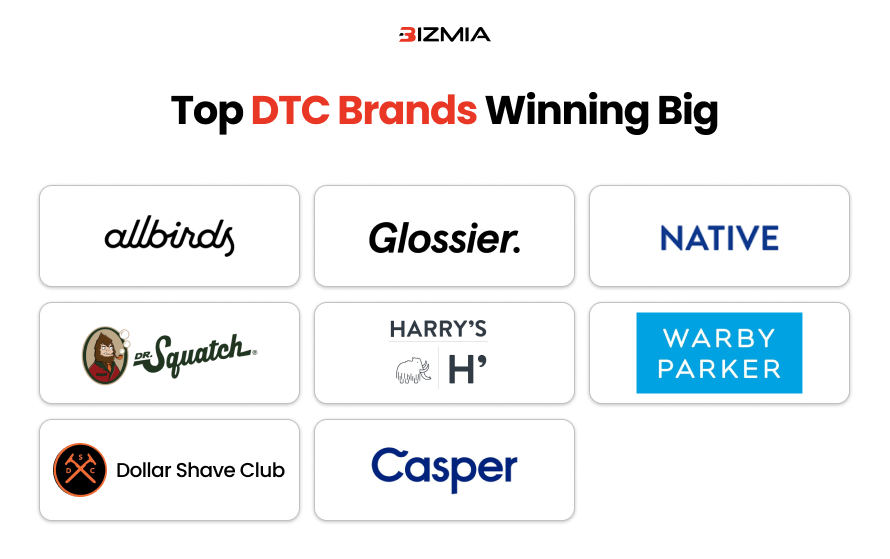
Multiple brands worldwide have shifted to DTC e-commerce and DTC marketing by building loyalty among customers. Have a look at them:
Allbirds
This brand is popular for comfortable and sustainable footwear. Their prime focus is transparency, eco-friendly materials, and direct engagement with consumers who are environmentally conscious. That’s the reason Allbirds gained momentum.
Native
Native was initially a deodorant brand, then it focused on natural ingredients and scaled itself well as a DTC brand. Eventually, it was acquired by P&G.
Warby Parker
This brand has eliminated optical store markups and clearly disrupted the eyewear industry this way. Also, their socially conscious mission and home try-on features won over customers.
Casper
Casper offers a 100-night trial with an easy online buying facility. With their DTC model, there is no need to visit showrooms.
Dr Squatch
Used relatable and funny videos to sell its natural soaps to men. Moreover, it used TikTok and YouTube for its viral success as a direct-to-consumer brand.
Dollar Shave Club and Harry’s
These brands offered subscription services and took on shaving giants. Their convenience and humorous branding attracted a new generation of male consumers.
Glossier
It started as a beauty blog and converted into a billion-dollar direct-to-consumer beauty brand. Glossier is a cult favorite all because of its minimalist product design and community-first approach.
Benefits of D2C Ecommerce
Various DTC brands enjoy multiple strategic benefits, including:
- Higher profit margins and competitive prices are achieved by bypassing intermediaries.
- Direct access to customer data, smarter marketing, customized experiences, and faster feedback loops.
- Direct-to-consumer brands pivot quickly, no matter whether they are responding to market trends, updating a campaign, or even testing a new product.
- The storytelling of DTC brands becomes more coherent and consistent
- Better customer relations with direct communication
- Transparency, agility, and control are lacking in traditional retail brands.
Challenges of Running DTC Brands
Although there are many benefits of DTC brands, they come with challenges. Some of the most commonly faced challenges are discussed below:
- Getting clients is expensive due to the increasing costs of running ads on Google and Facebook.
- Investment and coordination are required for logistics management, which includes warehousing, shipping, returns, and a lot more.
- Need for a dynamic customer service system.
- Competition is fierce in the D2C market and requires efficient operations and consistent innovation.
- Customer retention and trust building are not so easy with the DTC model; you need to go the extra mile.
DTC Vs B2C Ecommerce
Although both D2C and B2C models are about reaching the end consumer, the difference lies in how products reach the shopper. Business to Consumer (B2C) means any business that sells to consumers, but mostly involves brokers like department stores, marketplaces, and third-party e-commerce platforms.
On the other hand, DTC brands take care of everything by themselves, including marketing, sales, production, and distribution, cutting out the middleman. This way, they have direct access to customer data and complete ownership of the customer’s journey.
For quick DTC vs B2B understanding have a look at the given table:
| Feature | DTC | B2B |
| Definition | Brand sells directly to consumers | Brand sell to consumers via middleman |
| Sales Channels | Physical stores Social media Brand-owned websites | Department stores Marketplaces (like Amazon) |
| Middleman | ❌ | ✅ |
| Control over customer experience | Full control | Limited control |
| Customer data access | Direct access | Limited access |
| Costs | Lower | Higher |
| Marketing | In house | Handled by partner or outsourced |
| Brand Loyalty Potential | High | Low |
What’s The Future of DTC Ecommerce?
If we talk about transformative growth, the future of DTC e-commerce is bright- all thanks to advancements in AI, immersive digital experience, and personalization. The tech trends and improvements are enabling top DTC brands to offer more tailored experiences and build stronger and more direct contact with customers.
Wrapping Up
We can conclude without any doubt that the DTC approach has redefined the way brands connect with consumers, building authentic data-driven relationships, cutting out brokers, and increasing profit margins. Moreover, it’s an agile and scalable model that can thrive with growing customer expectations. You can leverage a direct-to-consumer sale strategy no matter whether you are a startup planning to scale or an established business looking for new revenue streams.