
Beyond sales, Black Friday is a social and cultural event. For online merchants, it’s their make-or-break season of the whole year. However, by 2025, the traditional approach of door crashes and long lines is almost nostalgic. The real game now for shoppers’ attention is personalized feeds, digital storefronts, and AI-driven deal lists. Now the line between Thanksgiving, Black Friday, and Cyber Monday is vague and has turned into a continuous shopping season, because buyers are not looking for a single day; they now respond to personalized recommendations, predictive price alerts, and voice-based searches.
Previously, merchants relied on discount depth and now focus on speed, tailored recommendations, and user experience. The rules of Black Friday are being totally rewritten, from AI-powered shopping assistants to eco-conscious shoppers opting for sustainable shipping.
This comprehensive guide explains the latest Black Friday 2025 trends and how they are shaping this holiday season. This will help retailers stay aware of new tech and e-commerce trends and adopt practical strategies to improve sales.
Key 2024 Stats and Black Friday 2025 Forecast: A Snapshot
The holiday season in 2024 already hinted at what 2025 will hold. As per the various authentic sources, including Adobe Analytics, Statista data models 2025 projects, and NFR, here are the numbers shaping Black Friday this year:
| Metric | 2024 Data | 2025 Forecast | Key Insight |
|---|---|---|---|
| Online Black Friday sales (U.S.) | $10.8 billion | $12.2–$12.5 billion |
|
| Total U.S. holiday eCommerce spend (Nov–Dec) | $222.1 billion | $253.4 billion |
|
| Mobile share of purchases | 69% | 72%+ |
|
| Average cart value (AOV) | $110 | $123 | Inflation + bundled offers increase spending per shopper. |
| Top shopping categories | Electronics, fashion, home, toys | Same, with AI devices & smart home tools rising | AI hardware + home tech lead gift trends. |
| Number of U.S. shoppers (Thanksgiving–Cyber Monday) | 197 million | Over 205 million | Holiday participation remains strong |
In-Store Vs Online Spending Stats [2021-2025]
Before getting deep into the top Black Friday trends, let’s have a look at how people spent in-store shopping vs online shopping from the year 2021 to 2024 and what the projections are in 2025. You can see in the given pie charts the spending through each mode of shopping:
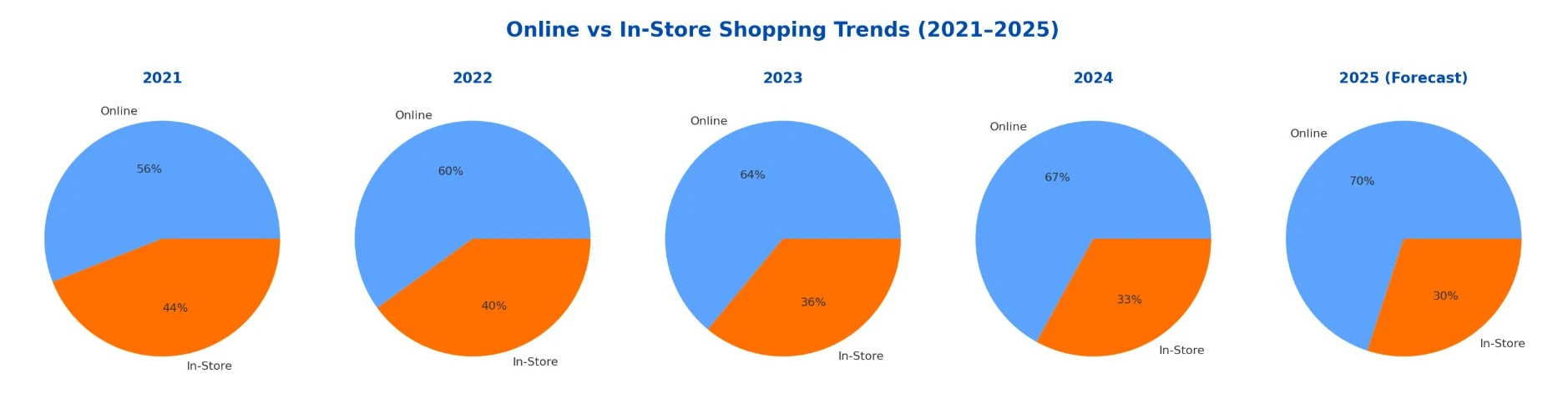
It is quite clear from the charts that online shopping trends have increased from 56% to 70% (estimated) during the past four years. On the other hand, a considerable decrease is visible in traditional shopping trends. These stats tell the story of over the years, people trusting the online mode of shopping than ever before.
8 Top Black Friday 2025 Trends: A Detailed Discussion
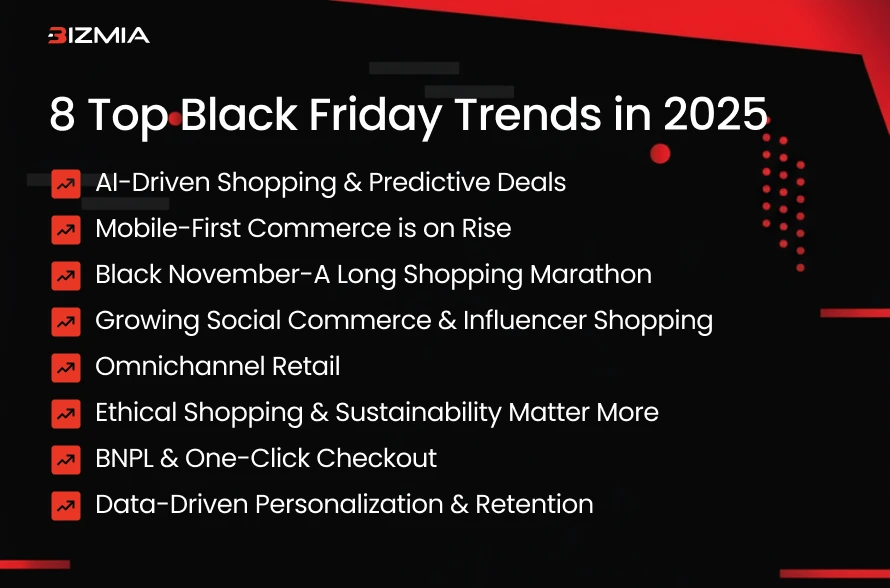
Let’s learn about the 8 top Black Friday trends in 2025, from AI-powered shopping and predictive deals to data-driven personalization and recommendations:
Trend#1: AI-Driven Shopping & Predictive Deals
From designing personalized deals to real-time price adjustments, AI is the backbone of Black Friday 2025 shopping season. Now, shoppers trust AI assistants more to do the heavy lifting. Different voice assistants like Siri, Alexa, and Google Assistant now evolved beyond just setting reminders. They can scan Black Friday catalogs, analyze and compare prices across various retailers, and finalize product purchases on the user’s behalf.
Pricing decisions are now heavily influenced by predictive analytics. Multiple AI models study cart abandonment patterns, customer browsing behavior, and purchase history to identify the moment when a shopper is most likely to buy. Beyond blanket discounts, this Black Friday marketing is more about the right time, right person, and right price.
However, despite all hyper-personalization and AI-driven customer services, human touch remains critical. AI can easily assess trends, but humans add emotion, storytelling, and creativity. So, the trick is:
AI——For intelligence
Humans——For empathy
Trend#2: Mobile-First Commerce is on the Rise
One of the clearest signals from the last few Black Friday seasons is that, for modern shopping, smartphones have officially become shopping malls. No need to wait to open your laptops on Cyber Monday; you can easily find, compare, and purchase through your phones. Black Friday 2025 is the most mobile-driven shopping event in holiday history. People are not bound to sit down and shop. They shop while standing in line, watching TV, or even commuting. So, the mobile-first trend is not just limited to responsive design; it caters to mobile psychology including thumb-friendly buttons, effortless checkout process, and fast page loading.
When AI personalization is combined with mobile convenience, magic happens. Users can have context-based product recommendations with AI-driven suggestions. So, it is not wrong to say that mobile phones are now the epicenter of modern shopping and part of the sale boost on Black Friday as well.
Trend#3: Black November-A Long Shopping Marathon
After Thanksgiving, Black Friday used to be a single chaotic day. But, in 2025, it has become a shopping marathon (which is a month-long) often called “Black November”. Merchants are realizing that spreading discounts for an extended period not only boosts revenue but also reduces logistic strain.
Nowadays, the early bird economy is rising, and people start looking for Black Friday deals even before the start of Thanksgiving week in the United States. Many popular brands like Walmart, Amazon, and Target launch their holiday season campaigns in early November now, even though some start right after Halloween.
In 2025, sales begin when the algorithm decides, not when D-Day arrives. Here’s a snapshot of the old Black Friday and the latest Momentum marketing Black November approach:
| Model | Flash Sale (Old Black Friday) | Momentum Marketing (Black November) |
|---|---|---|
| Duration | 24–48 hours | 3–4 weeks |
| Customer Behavior | Impulse buying | Planned, research-driven |
| Marketing Focus | Urgency & scarcity | Engagement & personalization |
| Logistics Impact | High order spikes, delivery delays | Balanced workflow & fulfillment |
| Result | Short-term sales | Higher retention & brand recall |
Trend#4: Growing Social Commerce & Influencer Shopping
The social commerce concept is redefining Black Friday in 2025. It’s the fusion of instant purchasing and social media engagement. In comparison with e-commerce sites, platforms like YouTube Shopping, Instagram Checkout, and TikTok Shop are converting browsers into shoppers faster.
In 2025, Gen-Z shoppers trust social media influencers more and like to buy on their recommendations. That’s why influencer partnership is a trending tactic for brands and a front door to Black Friday sales.
From Scrolling to Shopping, where action happens:
| Platform | Key Feature | Black Friday 2025 Impact (Forecast) |
|---|---|---|
| TikTok Shop | In-app checkout, algorithmic exposure | Dominating impulse shopping through viral deals |
| Instagram Checkout | Seamless link-to-purchase flow | Used heavily for fashion, beauty, and accessories |
| YouTube Shopping | Integrated product tagging in videos | Long-form product demos driving high-intent conversions |
| Shoppable Pins + gift guides | Ideal for pre-holiday inspiration and early deal discovery | |
| Facebook Live Shopping | Interactive flash deals | Engages older demographics during Thanksgiving weekend |
Trend#5: Omnichannel Retail
This year, Black Friday is not entirely online or offline either. It’s a mix of both. Buyers expect a blend of digital convenience and physical accessibility. Such a hybrid shopping model is trending, whether you are reserving your favorite product online, picking it up from a store, or scanning a QR code to avail offers. This omnichannel shift is influencing Black Friday, 2025.
Urgency+ Personalization+ Convenience=Omnichannel Retail
Here are some useful omnichannel strategies, their adoption trend, and customer satisfaction stats:
| Omnichannel Strategy | Adoption Rate in 2023 | Projected for 2025 | Customer Satisfaction Score |
|---|---|---|---|
| BOPIS / Curbside Pickup | 49% | 72% | 9.1 / 10 |
| In-App Loyalty Integration | 41% | 68% | 8.7 / 10 |
| AR Product Previews | 28% | 54% | 8.9 / 10 |
| Unified Returns Across Channels | 37% | 63% | 9.0 / 10 |
Trend#6: Ethical Shopping & Sustainability Matter More
Eco-friendly and Black Friday are no longer contradictions. Shoppers are not just after discounts, but they are more conscious about Environment, Social, and Governance (ESG) Products and avoid non-ESG products. Millennials and Gen-Z want to know:
- Is the brand transparent about its sourcing of materials?
- Does a brand adopt recycled packaging?
- Labels like “vegan”, “ethically sourced”, or “biodegradable” are mentioned or not.
This graph tells the difference in sales growth of ESG vs Non ESG products during the last 5 years:
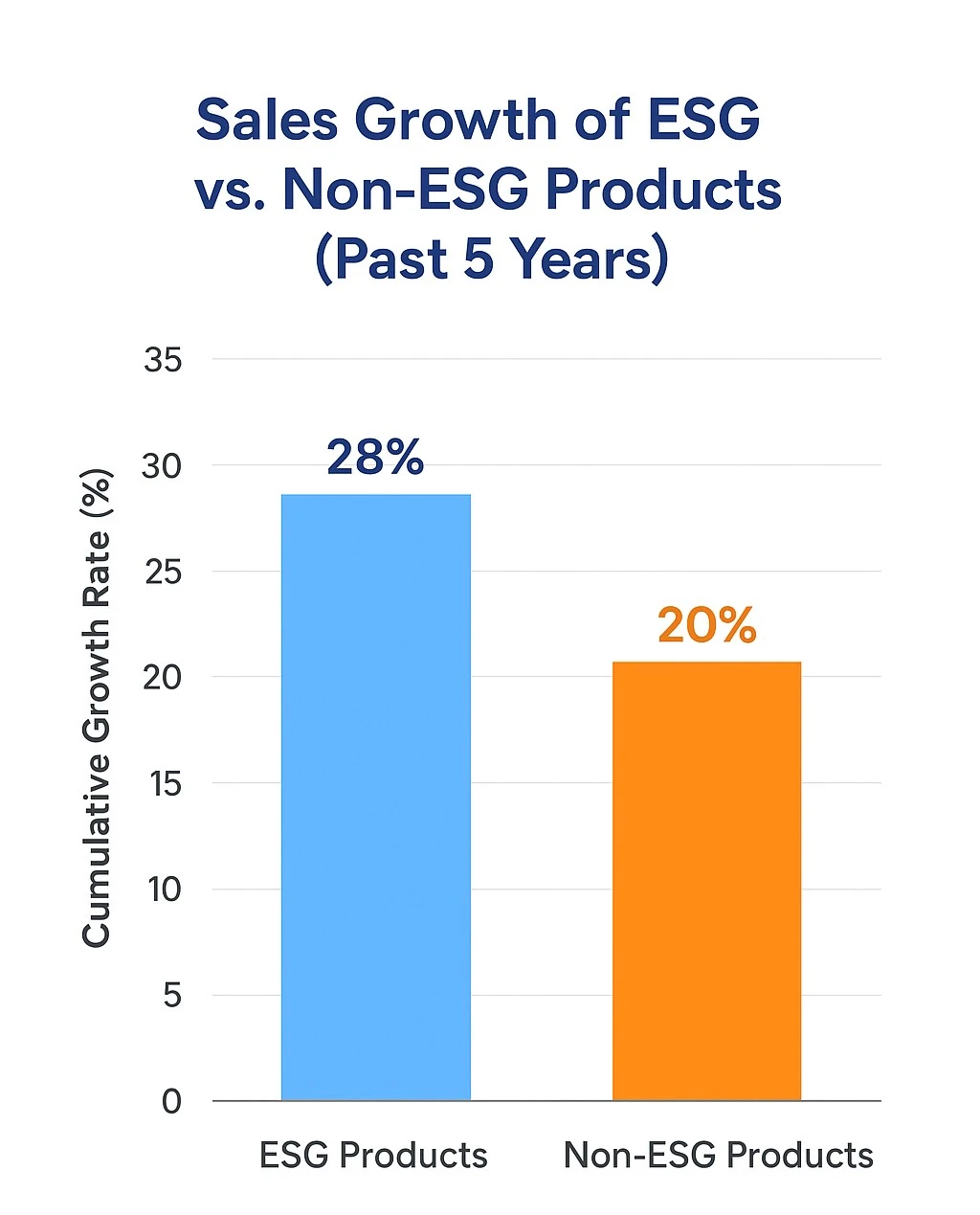
This eco-friendly shopping approach is now being called “Conscious Black Friday.”
Trend#7: BNPL & One-Click Checkout
For e-commerce success in general and Black Friday in particular, Buy Now, Pay Later (BNPL), digital wallets, and other flexible payment options have become a silent powerhouse. That’s the reason retailers are investing in one-click payment buttons, AI-powered fraud detection, and Autofill-enabled guest checkouts.
Now, Black is more about who makes the buying experience easier for shoppers.
Trend#8: Data-Driven Personalization & Retention
Data-driven personalization is becoming the true currency of e-commerce, especially in 2025. Retailers who are well aware of their customers will experience a major boost in sales. Data-driven personalization is also playing a role in a better future of Black Friday marketing by focusing on precision targeting:
- Sending tailored Wishlist discounts to shoppers
- Recommending complementary items via AI
- Based on purchase intent, segmenting audiences
Marketing Strategy for Black Friday 2025
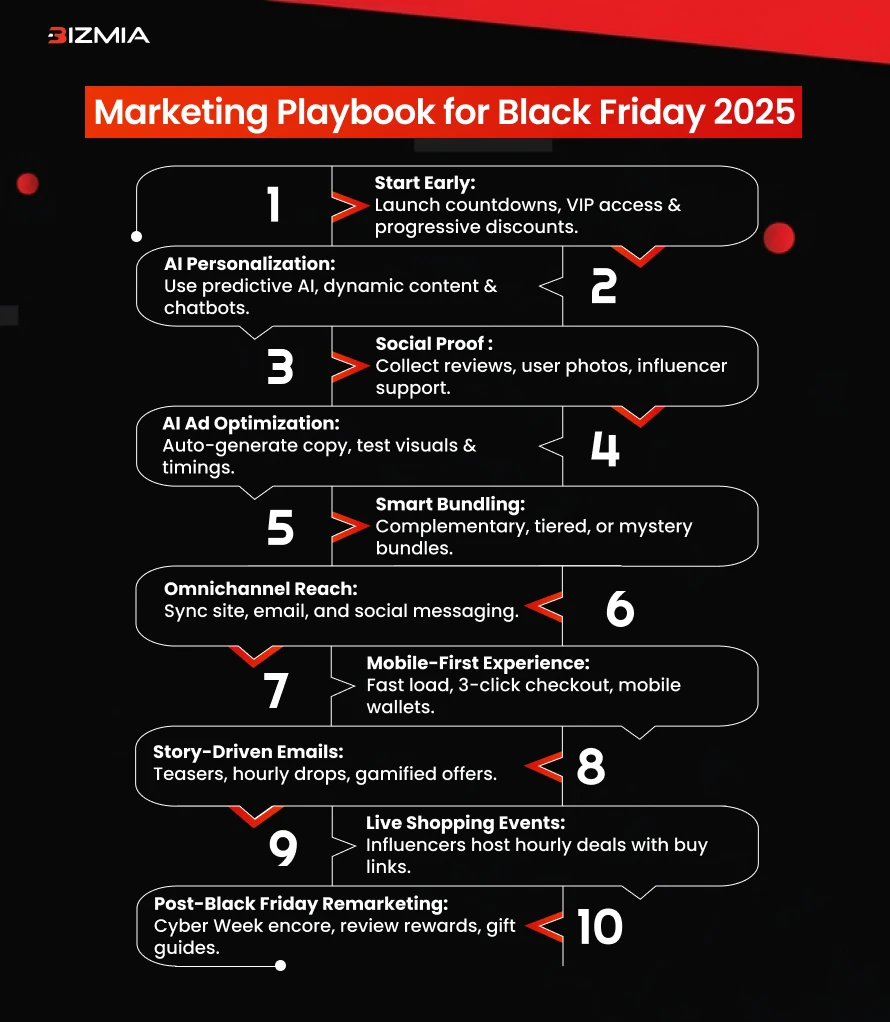
This year’s Black Friday is not just about the catchy Black Friday deals; it’s more about digital precision, audience targeting, and strategic storytelling. Here’s a playbook for retailers to help them blend AI, emotion, and automation to capture conversions and clicks:
Black Friday: What Lies Ahead in 2026 & beyond?
To date, Black Friday has transformed from a one-day shopping frenzy to a global e-commerce season. As 2026 approaches, it is evident that this shopping event will continue to evolve alongside consumer behavior, technology, and environmental consciousness in the near future. Merchants will adopt:
- Predictive AI to have an idea of what customers would want.
- Dynamic pricing models, personalized shopping feeds, and emotion-based ad targeting
- Metaverse storefronts
- Subscription-based Black Friday models
- Brand identity based on sustainable shopping
- New market entry into (Asia, the Middle East, and Africa that are already joining this wave, leading to globalization
- Tech-driven future not without a human touch
Wrapping Up
In 2025, Black Friday is no longer about midnight queues and crowded malls; it’s an AI-fueled and data-driven digital shopping experience. Brands that understand today’s impatient, mobile, and emotionally driven consumers will thrive in this year’s sales. Their success lies in optimization, tailored interactions, and starting early for an unmatched user experience. Whether you are a small business or an established retailer paying attention to sustainability, AI innovation, and customer trust will set you apart in this holiday 2025 season.